

As global trade continues to shift in response to economic pressures, geopolitical dynamics and evolving supply-chain strategies, the shipping container market is entering 2026 with both opportunities and uncertainties. After experiencing significant fluctuations over the past few years, businesses are now asking the same question: What will shipping container prices and container availability look like in 2026?
According to IMARC, the global shipping container market reached USD 11.9 billion in 2024 and is expected to grow to USD 21.5 billion by 2033, signalling strong long-term demand. However, short-term volatility remains a defining feature of the market.
This blog explores the key factors shaping 2026, what buyers and renters should prepare for and how businesses can navigate pricing, procurement and inspection more effectively.
Why 2026 is Expected to Be a Volatile Year
Several ongoing and emerging pressures will make container availability in 2026 more unpredictable than it has been before.
1. Supply Chains Are Still Adjusting
Most shipping containers are manufactured in China and then distributed globally. Disruptions in production, shipping schedules or raw material costs can quickly impact global supply.
2. Ageing Fleet Entering the Resale Market
Traditionally, used containers entered the second-hand market at 7–15 years old. Today, many are only being released at 10–20 years, meaning the used inventory is older and may require more careful inspection.
3. Trade Route Instability
As seen in 2024 and 2025, disruptions through the Panama Canal, Suez Canal, and Red Sea increased transit times and operational costs. These pressures are likely to continue into 2026, affecting shipping container prices and availability across key regions.
4. Rising Demand for Specialised Equipment
High-cube units, double-door containers, and specialised storage units are gaining traction, resulting in sharper price changes and reduced supply of these premium formats.
Price Drivers in 2026: What Will Influence Costs?
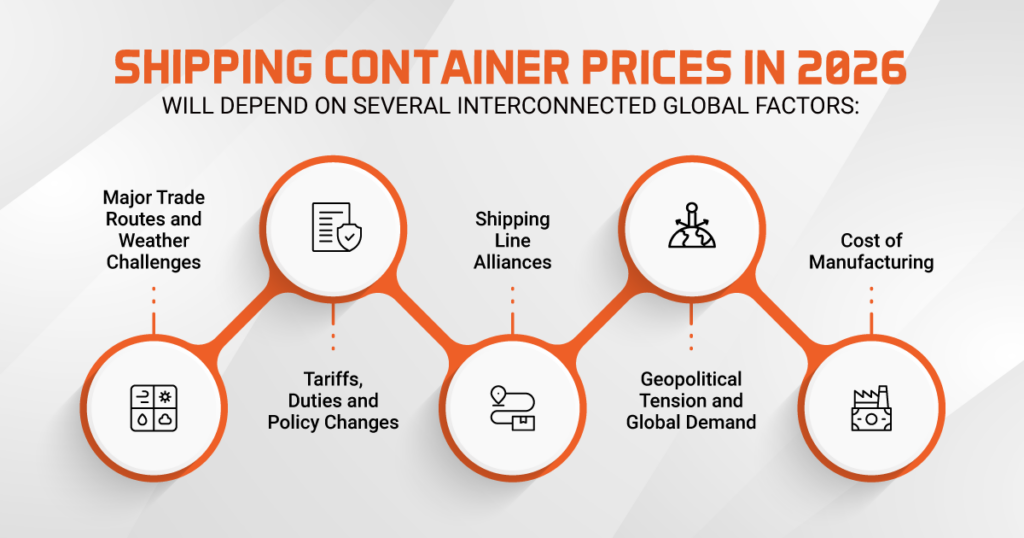
Shipping container prices in 2026 will depend on several interconnected global factors:
1. Major Trade Routes and Weather Challenges
Climate-driven issues such as low water levels in the Panama Canal and rerouting around conflict zones can increase fuel use, shipping time and freight rates. Higher transport costs generally lead to higher container prices.
2. Tariffs, Duties and Policy Changes
Any tariff updates between the US, China, Europe or Southeast Asia will influence the cost of importing new containers. Even minor changes can significantly affect bulk purchases.
3. Shipping Line Alliances
Realignments within major alliances reshape how containers are circulated worldwide. When carriers redeploy vessels, certain regions may experience sudden container shortages or oversupply.
4. Geopolitical Tension and Global Demand
Trade restrictions, conflict zones and fluctuating consumer demand continue to affect the global flow of goods, which will directly impact container availability in 2026.
5. Cost of Manufacturing
Steel prices, labour costs and environmental regulations in China will continue to influence new container production costs.
How to Negotiate and Inspect Containers in 2026
With higher price volatility and an ageing used-container pool, buyers and lessees must be more strategic than ever.
1. Compare New vs Used Options
- New/one-trip containers offer better longevity and cargo worthiness.
- Used containers can be cost-effective but may require repairs or modifications.
Always factor in long-term value, not just upfront pricing.
2. Lease When Flexibility Matters
For short-term or uncertain cargo requirements, shipping containers for lease may be a more economical choice. Leasing avoids long-term maintenance responsibility and helps businesses adapt to rapid market changes.
3. Use a Detailed Shipping Container Inspection Checklist
Before committing to a purchase, ensure that you physically review the container. A reliable shipping container inspection checklist should include:
- Exterior rust, dents and corrosion
- Structural integrity of corner posts and beams
- Door alignment and locking mechanism condition
- Roof damage, water seepage or light penetration
- Floor integrity, especially in older units
- ISO compliance markings
- CSC plate validity when required
Given that many used containers entering the market are 10–20 years old, inspection is essential for safety and ROI.
4. Work Only with Trusted Suppliers
Reputable suppliers provide grading transparency, delivery assurance, after-sales support and detailed documentation. This is particularly important for specialised units like reefers or high cubes.
5. Negotiate Volume and Delivery Terms
In volatile markets, you can often negotiate better rates by:
- Bundling multiple containers
- Scheduling off-peak deliveries
- Choosing mixed-condition inventory
- Asking for lease-to-own options
Conclusion
The 2026 shipping container market will be shaped by global disruptions, ageing resale fleets and strong long-term demand. Buyers can expect fluctuating shipping container prices and uneven availability depending on region and container type.
However, with the right strategy, sourcing approach and inspection processes, businesses can still secure durable, cost-effective units that meet their operational needs. Whether you are looking to purchase or lease shipping containers, we are here to support you. At ARCON Containers, we’re committed to guiding you with our expertise and reliable solutions so you can navigate 2026’s challenges with confidence.